
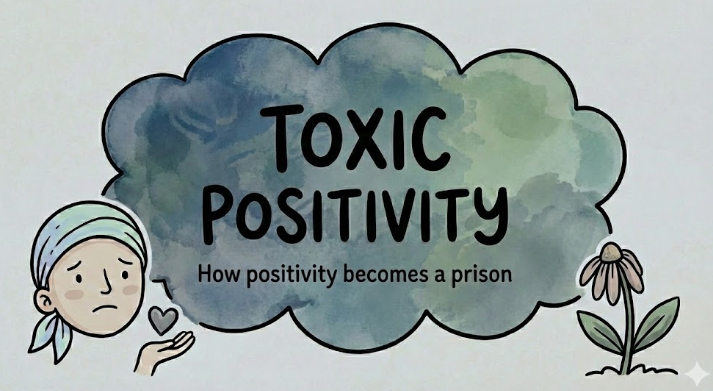
Positivity is often seen as a solution to everything. From social media posts to everyday conversations, we are constantly told that staying positive can fix even the toughest situations. However, when it comes to serious illnesses like cancer, this idea can sometimes turn harmful. This is where the concept of toxic positivity comes in — the pressure to stay happy and hopeful even when someone is suffering deeply.
Cancer is not just a physical illness. It affects a person emotionally, mentally, and socially. Patients experience fear, pain, uncertainty, anger, and exhaustion. Yet, instead of being allowed to feel these emotions, they are often told things like “stay strong,” “don’t think negative,” or “everything will be fine.” While these statements may come from a place of concern, they often ignore what the patient is actually going through.
Why do you think toxic positivity is especially harmful for cancer patients?
Responding to this, Anchal Sharma explained that toxic positivity makes negative emotions seem unacceptable. She shared that when patients are constantly pushed to be positive, they feel pressured to hide their pain just to make others comfortable. “When positivity is forced on cancer patients, it makes them feel like their fear or sadness is wrong,” she said. Instead of feeling supported, patients may feel emotionally misunderstood and isolated.
This emotional isolation can lead patients to stop sharing their true feelings and pretend they are okay, even when they are struggling deeply.
We often hear phrases like ‘everything happens for a reason.’ How do such statements affect patients?
Anchal pointed out that toxic positivity also appears in everyday language. Common phrases like “everything happens for a reason” or “others have it worse” may sound comforting, but they often shut down meaningful conversations. “These statements stop patients from expressing what they are actually going through,” Anchal said. Rather than helping, such remarks can make patients feel guilty for feeling low or scared during their journey.
So what kind of support do cancer patients actually need?
According to Anchal, what cancer patients truly need is empathy, not motivation. They need people who can listen without trying to fix their emotions or offer constant advice. “Sometimes, just saying ‘I understand this is hard’ matters more than giving hope-filled advice,” she shared. Allowing patients to talk freely about their fears helps them feel heard and less alone.
From a broader perspective, the discussion made it clear that positivity is not bad — but it should never be compulsory. It is completely normal for cancer patients to have bad days. Feeling sad or scared does not mean they are weak or giving up. Healing is not only about medical treatment; it also involves emotional acceptance.
In the end, moving away from toxic positivity means choosing kindness over comfort and understanding over quick reassurance. By creating space for honest emotions, we can support cancer patients in a way that feels real, respectful, and truly human.
By Unnati Saxena
Initiative by Group Imagination Unleashed
